
Dunk Island history: from Coonanglebah to the Beachcomber
Dunk Island history goes back tens of thousands of years before the island had its English name. Dunk Island is a rainforest-covered island in the Great Barrier Reef, about 4km off Mission Beach in Far North Queensland. Its most famous European resident, the writer E.J. Banfield, lived there for more than 25 years and is buried a short walk from where today’s ferry lands.
This guide covers the island’s Traditional Owners, Banfield’s life and books, what happened after him, and how to find his grave on a day trip. Information checked October 2026.
Key facts at a glance
- Traditional name: Coonanglebah, shared by the Bandjin and Djiru peoples
- English name: given by Lieutenant James Cook, who sailed past on 8 June 1770
- E.J. Banfield: lived on the island from 28 September 1897 until his death on 2 June 1923
- Best-known book: The Confessions of a Beachcomber (1908)
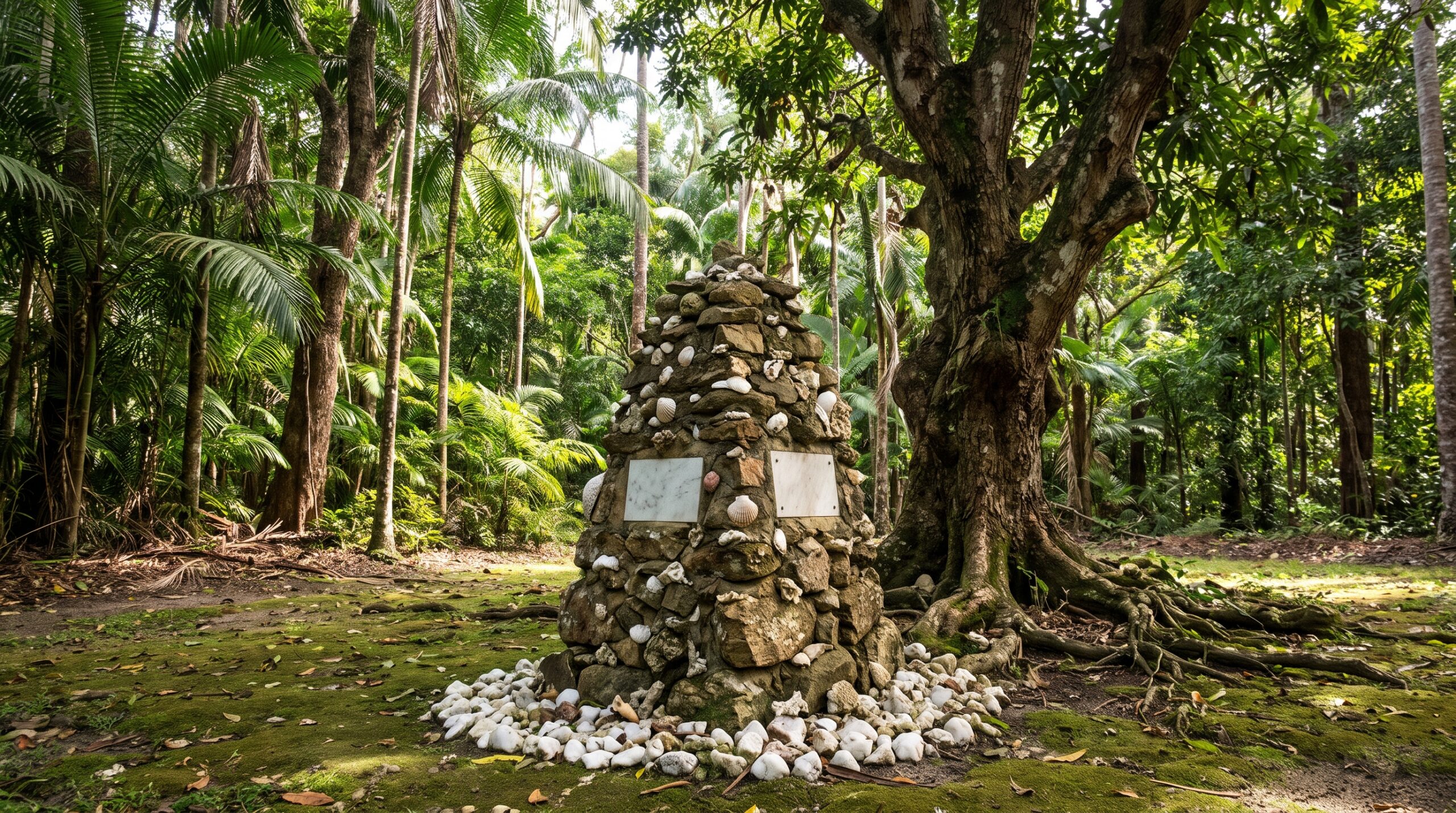
- Grave: the Banfield Memorial Reserve and Grave, on the Queensland Heritage Register since 6 August 2010
- Size: 970 hectares, about 730 hectares of it national park
Coonanglebah: the Bandjin and Djiru peoples
Long before Cook or Banfield, Dunk Island was Coonanglebah. According to Queensland Parks and Wildlife Service, the island is shared by the Bandjin, who are saltwater people, and the Djiru, mainland people from the Mission Beach coast. Both groups have lived in the area for tens of thousands of years.
Rock-shelter paintings and shell middens on the island show that long connection. The Djiru and Bandjin still have strong ties to Coonanglebah and help manage it today. In their stories, Girroo Gurrull, an ancestral spirit who was part man and mostly eel, named islands and waters as he travelled.
When you visit, treat the island as a living cultural landscape. Stay on formed tracks and leave shells, stones and plants where you find them.
How did Dunk Island get its name?
Lieutenant James Cook sailed past the Family Islands on 8 June 1770 during his voyage up the east coast. He named only one island in the group: Dunk, after George Montagu-Dunk, the Earl of Halifax. The name “Family Islands” covers Dunk and the smaller islands around it, including Bedarra.
Who was E.J. Banfield?
Edmund James “Ted” Banfield was born in Liverpool, England, on 4 September 1852. His family moved to Victoria in 1858, and he grew up to work as a journalist. He was a keen reader of Henry David Thoreau, the American writer who wrote about living simply in nature.
In 1882 Banfield moved north and became sub-editor of the Townsville Daily Bulletin. On a trip to England for eye treatment, he met Bertha Golding. She emigrated to Townsville and they married there in 1886.
Why did Banfield move to Dunk Island?
Ill health pushed Banfield to look for a quieter life. He and Bertha leased part of Dunk Island and moved there on 28 September 1897. He later selected 320 acres (about 130 hectares), and a deed of grant was issued to him in 1900.
Records from the Queensland State Archives show their bungalow was finished at the end of 1903. Cyclones in January and March 1918 destroyed the house, and the couple rebuilt it.
Life on the island
From early 1898 Banfield kept a daily record of the island’s plants, birds and wildlife. He also recorded Aboriginal names for the island’s features and learned from the Bandjin and Djiru people about their customs and knowledge of the land.
His notes became more valuable over time. In the early 20th century, local Aboriginal people were moved off Country to missions, so Banfield’s records preserved details that might otherwise have been lost.
He also campaigned for protection. The Family Islands were proclaimed a bird reserve on 10 May 1905, and Banfield was made Honorary Ranger on 24 June that year.
Confessions of a Beachcomber and Banfield’s other books
Banfield’s writing turned a remote island into a place people dreamed about. He called Dunk his “Isle of Dreams”. His books include:
- Within the Barrier (1907): a tourist guide to the North Queensland coast commissioned by the Queensland Government
- The Confessions of a Beachcomber (1908): his most successful book, which earned him the nickname “the Beachcomber”
- My Tropic Isle (1911)
- Tropic Days (1918)
- Last Leaves from Dunk Island (1925): published after his death, edited by Alec H. Chisholm, and describing the 1918 cyclones
You can read The Confessions of a Beachcomber free on Project Gutenberg. A chapter or two on the ferry over makes the walk to his grave more meaningful.
Banfield’s death and the memorial cairn
Banfield died of appendicitis on 2 June 1923, aged 70, and was buried on the island. Bertha lived another ten years, moving between Townsville, Victoria and Wynnum, and died on 6 August 1933. Her ashes were placed beside her husband’s grave, and a second tablet was added to the cairn.
The Banfield Memorial Reserve and Grave was gazetted as a reserve in 1971, with James Cook University as trustee. It was added to the Queensland Heritage Register on 6 August 2010.
What the grave looks like
- A rough triangular cairn of rubble and mortar, with shells set into the mortar
- Two marble tablets on the eastern face, one for Edmund and one for Bertha
- A bed of white quartz pebbles edged with granite around three sides
- A small rainforest clearing with an old mango tree and timber seats
The cairn is the only known surviving structure from the Banfields’ time on the island.
Dunk Island after Banfield
The Banfields’ bungalow became the basis of the island’s first resort, which began in 1936. During World War II the Royal Australian Air Force built an airstrip in 1941 and, in 1942, No. 27 Radar Station on Mount Kootaloo, the island’s highest point. The station was dismantled in 1945, and only rusted parts of its turning mechanism remain beside the summit track.
After the war the resort grew and changed owners many times. Cyclone Larry damaged it in 2006, and in 2011 Category 5 Cyclone Yasi passed directly over the island and destroyed much of it. The resort stayed closed for years.
In 2026 the island reopened to visitors with a jetty-side restaurant, Beachfront Eco Tents and Bayside Campsites, run by the Dunk Island Group. The former resort has not been rebuilt.
How to visit Banfield’s grave on Dunk Island
The grave sits on raised ground about 500m north-east of the former resort, between the old staff quarters and Goor-tchur Creek. The Queensland Heritage Register describes access from the resort area along a narrow, uphill concrete path with directional signs. Older approaches from the north and east are no longer usable.
Because the island has changed so much since the resort closed, ask the Dunk Island Group staff at the jetty for directions and whether the path is open on the day you visit.
Getting to Dunk Island
The official Dunk Island Ferry, managed by the Dunk Island Group, leaves Clump Point Boat Ramp at Mission Beach. At the time of checking it listed two departures, 8:45am and 12:30pm, with same-day returns and tickets from $41 per person. The operator’s own site says the ferry runs Wednesday to Sunday and takes about 20 minutes each way. Days and fares can change, so confirm when you book.
You can compare ferry options on our Dunk Island ferry guide. Mission Beach Ferry also runs trips to the island: you can book a Mission Beach Ferry trip from Mission Beach or book a Mission Beach Ferry trip from Cairns.
Coming from Cairns without a car? See the Explore Dunk Island full day tour from Cairns, which combines a coach and high-speed catamaran.
Combine it with a walk
Banfield wrote about the whole island, so it’s worth seeing more of it. The Dunk Island Group’s track guide lists these walks:
| Track | Distance (return) | Time | Grade |
|---|---|---|---|
| Muggy Muggy Beach | 3km | About 70 minutes | Easy |
| Mount Kootaloo | 7km | About 3 hours | Moderate |
| Coconut Beach | 7.5km | About 2.5 hours | Moderate |
| Island Circuit | 11km | About 4 hours | Moderate |
The Mount Kootaloo track takes you past the WWII radar station remains. Access can be affected at tides above 2.8m, so check tide times before you set out.
What to bring and safety tips
- Drinking water, a hat and closed shoes with good grip. Tracks can be slippery after rain.
- Reef-safe sunscreen, and don’t touch coral if you snorkel.
- Stinger season runs from November to May. Wear a stinger suit in the water and know where the vinegar is kept.
- Don’t swim in creeks or murky water: crocodiles live in Far North Queensland waterways.
- Dunk Island is mostly national park, so stay on tracks and take your rubbish home.
Want to stay overnight? See our Dunk Island camping guide for the Bayside Campsites and Beachfront Eco Tents.
Frequently asked questions
Who were the first people on Dunk Island?
The Bandjin and Djiru peoples, who know the island as Coonanglebah. They have lived in the area for tens of thousands of years, and rock-shelter paintings and shell middens on the island record that history. Both groups still help care for the island.
Who was the Beachcomber of Dunk Island?
E.J. Banfield, a journalist from Townsville who moved to Dunk Island with his wife Bertha in 1897. His 1908 book The Confessions of a Beachcomber made him famous and gave him the nickname. He lived on the island until he died in 1923.
Where is E.J. Banfield buried?
Banfield is buried on Dunk Island, about 500m north-east of the former resort, under a shell-studded stone cairn. Bertha’s ashes were placed beside him after she died in 1933. The site is on the Queensland Heritage Register.
Can you visit Banfield’s grave on a day trip?
Yes, the grave is close to the main visitor area near Brammo Bay, so it fits easily into a day trip. Ask staff at the jetty for directions and check the path is open on the day.
How did Dunk Island get its name?
Lieutenant James Cook named it in June 1770 after George Montagu-Dunk, the Earl of Halifax. It was the only island in the Family Islands group that Cook named.
What happened to the Dunk Island resort?
The resort was badly damaged by Cyclone Larry in 2006 and largely destroyed by Cyclone Yasi in 2011, then stayed closed for years. In 2026 the island reopened with a restaurant, eco tents and campsites, but the former resort has not been rebuilt.
Plan your Dunk Island day trip
A visit to Banfield’s grave takes less than an hour, which leaves time for a swim at Brammo Bay, a walk and lunch at the jetty. Browse our Dunk Island and Mission Beach tours to compare ferries, cruises and charters run by local operators, then book directly through the provider.