
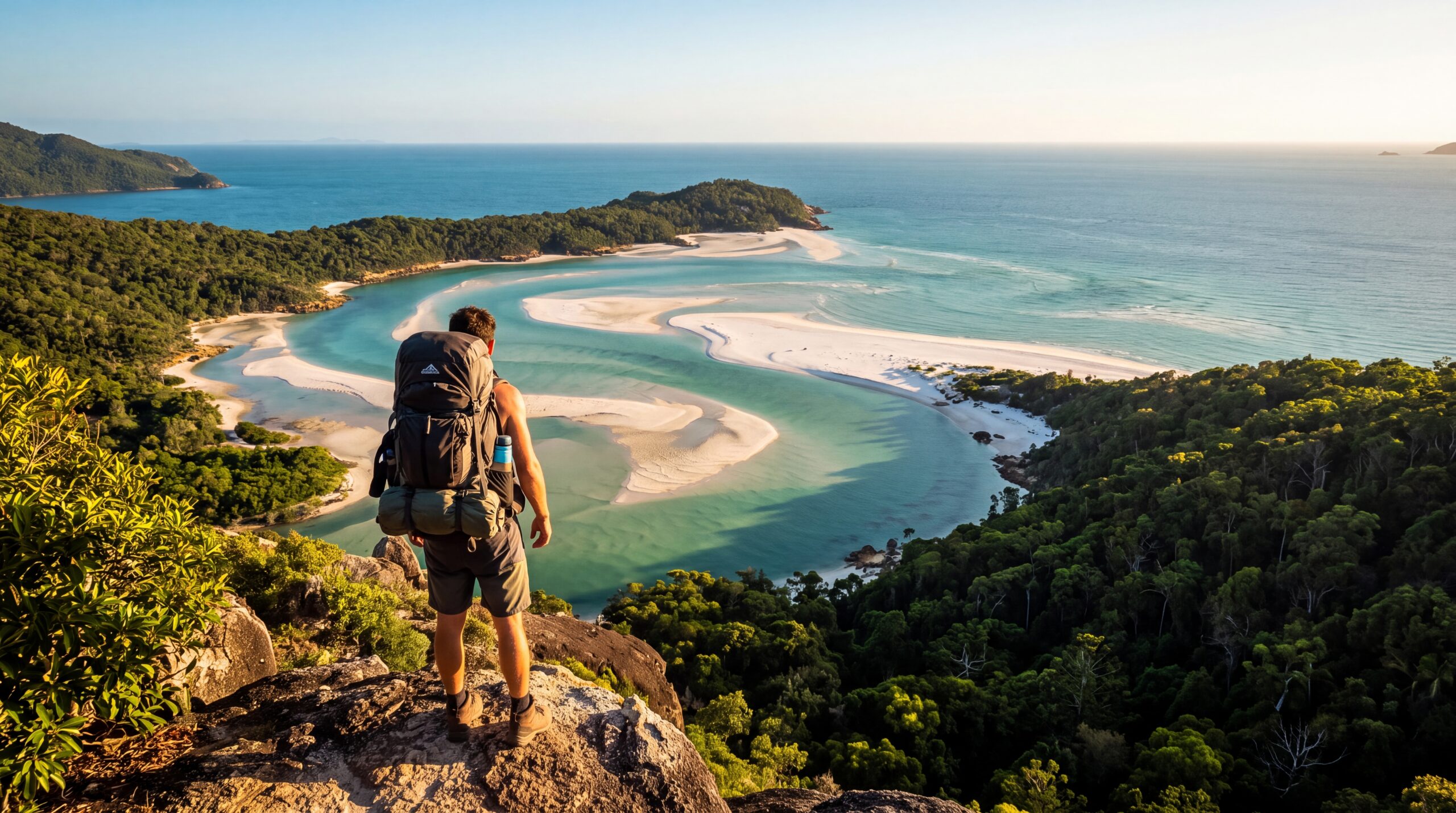
The Ngaro Track: Queensland’s Breathtaking New Whitsundays Island Hike Opening in 2026
The Ngaro Track Whitsundays is about to redefine what adventure travel looks like in Queensland. Imagine waking to the sound of Torres Strait pigeons in a rainforest camp, lacing up your boots, and setting out across a remote island trail that winds from the silica sands of Whitehaven Beach to the swirling tidal watercolours of Hill Inlet — with almost no one else around. That is the promise of the Ngaro Track, a brand-new 32-kilometre, three-day walking trail on Whitsunday Island that opened in May 2026 and is already being called one of Australia’s most exciting new wilderness experiences. With just 15 hikers permitted on the track each day, this is a rare thing: a genuinely exclusive, culturally rich and ecologically responsible adventure in the heart of the Whitsundays.
What Is the Ngaro Track — and Why Does It Matter?
The Ngaro Track takes its name from the Ngaro people, the Traditional Owners of the Whitsunday Islands, whose seafaring culture and deep connection to this country stretches back thousands of years. Developed in close partnership with Ngaro Elders and community representatives, the trail is not simply a walking route — it is an immersive cultural journey through one of Queensland’s most spectacular and historically significant landscapes.
The trail traverses Whitsunday Island itself, the largest of the 74 Whitsunday Islands and one that most visitors see only from the deck of a sailing catamaran. To walk its ridgelines, filter through its dry rainforest and stand above Hill Inlet at dawn is to experience a side of the Whitsundays that the vast majority of travellers will never know exists. The Queensland Government and Queensland Parks and Wildlife Service worked alongside World Expeditions — Australia’s most respected adventure touring operator — to design, develop and deliver the experience to the highest possible standard.
For a state that has long championed ecotourism, the Ngaro Track represents a genuinely significant milestone. It sits comfortably alongside the Larapinta Trail in the Northern Territory and the Three Capes Track in Tasmania as one of Australia’s great multi-day walks — and unlike either of those iconic routes, it places First Nations storytelling front and centre from start to finish.
The Route: Whitehaven Beach to Hill Inlet in Three Days
The Whitehaven Beach to Hill Inlet hike is the spine of the experience, but the Ngaro Track is designed to slow you down and draw you deeper into the landscape rather than simply connecting two postcard destinations. Here is what to expect across the three days.
Day One: Arrival and the Southern Ridgeline
Hikers are transferred by boat from Airlie Beach to the southern end of Whitehaven Beach — and yes, you get to walk along arguably Queensland’s most famous beach as your starting point. From here the trail climbs into dry eucalypt woodland and rainforest pockets, with sweeping views back across the Coral Sea. The first night’s camp is set in a sheltered forest clearing with solar lighting and composting facilities, designed to leave minimal trace on this protected environment. Ngaro guides share stories of the island’s significance — from traditional fishing techniques and canoe-building practices to the songlines that connect this country across the archipelago.
Day Two: The Heart of the Island
Day two is the most physically demanding section, crossing the island’s central ridge with elevation changes that reward every step with extraordinary panoramas. Look out for pied imperial pigeons, ospreys and, if you are fortunate, the endangered Proserpine rock wallaby in the rocky outcrops above the treeline. Interpretive stops along the route offer deeper context about Ngaro sea country and the role these islands played in traditional trade and ceremony. Camp two sits closer to the northern end of the island, and on a clear evening the lights of Hamilton Island are just visible across the passage.
Day Three: The Descent to Hill Inlet
The final morning brings what most hikers will remember for the rest of their lives. Rising early to catch the light, you descend through open woodland to the lookout above Hill Inlet — the swirling sand-and-water formation that has become one of Queensland’s most photographed natural wonders. Arriving here on foot, after three days of walking and storytelling and sleeping under island skies, is a profoundly different experience from stepping off a day-tour boat. You have earned this view. The boat transfer back to Airlie Beach departs mid-morning, giving you time to absorb the moment before returning to the mainland.
The Cultural Heart of the Ngaro Track
It would be easy to describe the Ngaro Track purely in terms of its scenery and logistics — but to do so would be to miss its most important dimension. The Ngaro people have maintained a relationship with these islands for more than 9,000 years, and the trail has been designed as a vehicle for sharing that knowledge with respectful visitors.
Ngaro guides accompany every group, sharing language, stories, ecological knowledge and cultural practices that have never previously been available to general visitors in this format. According to Queensland Parks and Wildlife Service, the development of the track involved extensive consultation with Ngaro Traditional Owners and was subject to a cultural heritage management process that ensured sensitive sites are protected and that community benefit flows directly from tourism activity on the trail.
This is ecotourism done right — not a tokenistic acknowledgement of country, but a genuine co-designed experience in which Indigenous voices shape the narrative from beginning to end. For travellers seeking meaningful connection alongside physical adventure, the Ngaro Track delivers something genuinely rare.
Booking the Ngaro Track in 2026: What You Need to Know
Given the strict cap of just 15 hikers per day, demand for the Ngaro Track is expected to significantly outstrip supply — particularly through the peak dry season months of June to September. Here is the essential planning information for 2026.
- Operator: World Expeditions holds the exclusive permit to guide guests on the Ngaro Track. Bookings are made directly through World Expeditions.
- Group size: Maximum 15 hikers per day on trail. Intimate group sizes mean a highly personalised experience.
- Duration: Three days, two nights on trail, with boat transfers from Airlie Beach included.
- Difficulty: Moderate to challenging. A reasonable level of base fitness is required — expect full hiking days of four to six hours with elevation gain. No technical skills are needed.
- Season: The trail operates during Queensland’s dry season (approximately April to October). The wet season brings both safety risks and seasonal track closures.
- What’s included: Guided interpretation with Ngaro cultural guides, all meals on trail, camping equipment, boat transfers and National Park fees.
- What to bring: Personal hiking gear including boots, a daypack, sun protection and any personal medications. World Expeditions provides a full packing list on booking.
For broader Whitsundays adventure planning — from sailing packages to island day trips — browse our curated selection of Queensland tours to build your perfect itinerary around the hike.
Before and After the Hike: Making the Most of the Whitsundays
The Ngaro Track is a highlight, but the Whitsundays region offers enough to fill a week or more of spectacular travel. Most hikers fly into Proserpine (Whitsunday Coast) Airport or arrive via Hamilton Island Airport, both of which have direct connections from Brisbane, Sydney and Melbourne.
Airlie Beach — the mainland gateway to the Whitsundays — has transformed from a backpacker hub into a genuinely excellent base for all travel styles, with a growing selection of boutique accommodation, excellent seafood restaurants and a lagoon pool that is perfect for an afternoon recovery after three days on trail. Consider arriving a day early to acclimatise, explore the Airlie foreshore and organise any last-minute gear.
If time allows, extend your trip with a night or two on one of the Whitsunday Islands — Hamilton Island, Daydream Island and Hayman Island all offer dramatically different experiences, from family-friendly resort stays to adults-only luxury. A sailing charter through the Whitsunday passages remains one of Queensland’s great travel pleasures and pairs beautifully with the walking experience as a complementary way to see the archipelago.
Is the Ngaro Track Right for You?
The Ngaro Track sits in a sweet spot that makes it appealing to a wide range of travellers. Adventure hikers will relish the physical challenge and remote island setting. Culture seekers will find the depth of Indigenous storytelling extraordinary. Couples and small groups looking for something genuinely special — a landmark trip rather than just another holiday — will find the combination of exclusivity, scenery and cultural richness hard to beat.
It is worth being honest about fitness expectations. Three days of hiking in subtropical Queensland, with meaningful elevation and humidity to contend with, is not a casual stroll. But the trail has been graded to be accessible to hikers with moderate fitness and some previous walking experience — you do not need to be a seasoned trekker to enjoy it. World Expeditions provides thorough pre-departure information to help you prepare.
What the Ngaro Track demands in physical effort, it returns many times over in experience. This is not a trail you walk and then move on from. It is the kind of journey that changes how you think about the Whitsundays, about Queensland’s First Peoples, and about what travel at its best can actually be.
Frequently Asked Questions: Ngaro Track Whitsundays
When does the Ngaro Track open?
The Ngaro Track officially opened in May 2026. Bookings for the 2026 season are available now through World Expeditions, with departures running through the dry season to approximately October 2026.
How do I book the Ngaro Track hike in 2026?
Bookings are made exclusively through World Expeditions, the licensed operator for the trail. Given the 15-hikers-per-day cap, early booking is strongly recommended — particularly for June through August departures, which are expected to sell out quickly.
How fit do I need to be to hike the Ngaro Track?
A moderate to good level of fitness is recommended. You should be comfortable hiking four to six hours per day with a daypack on uneven terrain. World Expeditions provides a fitness preparation guide to help you train ahead of your trip.
What is the best time of year to hike the Ngaro Track?
The dry season (May to October) offers the most stable conditions, with lower humidity, clear skies and comfortable temperatures for hiking. July and August are the most popular months. The trail does not operate during the wet season (November to April).
Is the Ngaro Track suitable for solo travellers?
Absolutely. Small group departures are ideal for solo travellers, and the intimate group size of up to 15 people means you will quickly connect with fellow hikers. Solo supplement costs may apply — check with World Expeditions at time of booking.
How does the Ngaro Track support Indigenous communities?
The trail was co-designed with Ngaro Traditional Owners and is guided by Ngaro cultural guides on every departure. A portion of all booking revenue flows directly to Ngaro community initiatives. The development process included a formal cultural heritage management assessment to ensure sensitive sites are protected throughout.
Ready to Walk One of Queensland’s Greatest New Trails?
The Ngaro Track Whitsundays is one of those rare travel experiences that genuinely delivers on its promise — a perfect convergence of spectacular landscape, authentic cultural connection and the irreplaceable satisfaction of arriving somewhere extraordinary on foot. With just 15 places available each day, the window to secure your 2026 booking is narrow. Start planning your Whitsundays adventure now, explore our full range of Queensland tours to pair with your hike, and make 2026 the year you discover the Whitsundays from the inside out.
Queensland Traveller may earn a commission from bookings made through links on this page.