Great Barrier Reef Winter Snorkelling 2026
June, July and August might be the coldest months on the calendar, but on Queensland’s Great Barrier Reef, winter is nothing short of magic. While the rest of Australia rugs up, Cairns and Port Douglas bask in warm, dry, crystal-clear conditions — and the Ribbon Reefs come alive with some of the most spectacular marine encounters on the planet.
If you’ve been wondering about the best time to visit the Great Barrier Reef, the answer for most travellers is right now. Water temperatures sit between 22–24°C, visibility stretches up to 30 metres, and there’s one extraordinary bonus that only winter delivers: the chance to snorkel alongside dwarf minke whales.
| Detail | Info |
|---|---|
| Best months | June, July & August |
| Water temperature | 22–24°C |
| Visibility | Up to 30 metres |
| Dwarf minke whale season | Mid-June to late July |
| Nearest cities | Cairns & Port Douglas |
| Reef access | Day trips & liveaboard cruises |
Why Winter Is the Best Time to Visit the Great Barrier Reef
The Great Barrier Reef’s seasons matter more than most travellers realise. Summer (December–March) brings the wet season to Tropical North Queensland — monsoonal rain, reduced visibility, and the presence of marine stingers along the coast. It’s not impossible to visit, but the experience is a different one entirely.
Winter flips everything. The trade winds push in from the southeast, polishing the sky to an impossible blue. Humidity drops. Rain almost disappears. And offshore on the Coral Sea, those same winds settle the water into a flat, glassy calm that makes every snorkel and dive session feel effortless.
Cairns and Port Douglas enjoy average daytime temperatures of 25–27°C during winter — warm enough to spend the day on the deck of a reef vessel in shorts and a rash vest. Evenings are genuinely pleasant for the first time all year, making this the most comfortable season to explore the region as a whole.
For international visitors making the long journey to Australia, winter is the clear window to tick the reef off their bucket list.
Dwarf Minke Whale Snorkelling on the Ribbon Reefs — One of the World’s Rarest Wildlife Encounters
Here’s the experience that sets Great Barrier Reef winter snorkelling apart from any other reef destination on Earth.
Every year between mid-June and late July, dwarf minke whales migrate north through the Coral Sea and regularly approach the Ribbon Reefs — a chain of pristine outer reef formations stretching from north of Cairns toward the tip of Cape York. What makes this encounter extraordinary is that these whales actively seek out boats. They’re curious, social animals, and they will frequently swim directly alongside snorkellers in the water for extended periods.
The Ribbon Reefs — particularly Ribbon Reef Nos. 9 and 10, around Cod Hole — are the epicentre of this phenomenon. It is the only place in the world where dwarf minke whales reliably interact with snorkellers in open water under a permitted wildlife interaction program. The Great Barrier Reef Marine Park Authority manages these encounters carefully, with strict guidelines to protect both the whales and the participants.
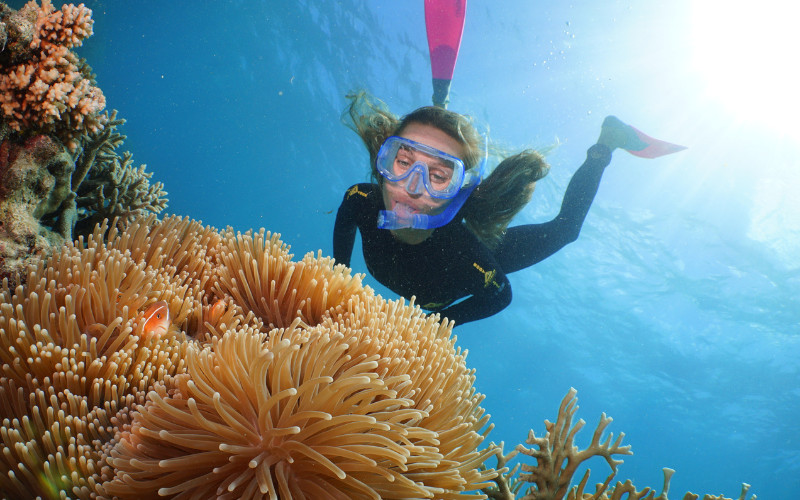
You don’t need to be an experienced diver. Snorkellers floating calmly at the surface are often rewarded with the most extended encounters — sometimes lasting 20 to 40 minutes as whales circle, roll and observe their human visitors. It is, by any measure, one of the great wildlife moments available to travellers anywhere on the planet.
You might also like:
The Ribbon Reefs: What to Expect
The Ribbon Reefs are remote, pristine, and genuinely unlike the reef systems closer to shore. Located roughly 100–150 kilometres northeast of Cairns, they are only accessible by liveaboard vessel — typically a two to four-night trip departing from Cairns Marlin Marina.
Along with dwarf minke whales, the Ribbon Reefs deliver:
- Cod Hole — one of Australia’s most legendary dive sites, where enormous potato cod will approach you at arm’s length
- Pixie Pinnacle — a spectacular bommie draped in soft corals and surrounded by schools of fusiliers
- Steve’s Bommie — advanced divers rate this among the top 10 dive sites in the world
- Overnight reef experiences — night dives reveal a completely different reef ecosystem that day visitors never see
Liveaboard operators running the Ribbon Reefs in winter include Spirit of Freedom, Tusa Dive, and Mike Ball Dive Expeditions. Cabins book out months in advance during peak minke season — if you’re planning a July 2026 trip, move quickly.
You might also like:
Day Trips from Cairns & Port Douglas: Great Outer Reef Access
Not every reef experience requires a liveaboard. Both Cairns and Port Douglas operate a fleet of premium day trip vessels that reach the outer Great Barrier Reef in 60–90 minutes.
From Cairns: Operators including Reef Magic, Sunlover Reef Cruises, and Passions of Paradise depart daily from Cairns Marlin Marina. Most day trips include snorkelling gear, a guided reef walk at the pontoon, and optional introductory or certified dives. Some vessels carry up to 60 passengers; smaller boutique boats cap at 20.
From Port Douglas: The Quicksilver Connections’ Wavedancer and Poseidon Outer Reef Cruises offer some of the most consistently praised day reef experiences in Queensland. Low Isles — a coral cay just 15 kilometres offshore — is ideal for families and first-time snorkellers. Agincourt Reef, reached by Quicksilver’s high-speed catamaran, puts you on world-class outer reef terrain.
In winter, day trips benefit from the calmer seas and exceptional clarity. Water temperatures are comfortable in a 3mm wetsuit or rashie, and the absence of stingers along the outer reef means you can snorkel freely without a stinger suit (though always check with your operator).
Browse Queensland tours to compare reef day trips and liveaboard options departing from both cities.
You might also like:
What to Snorkel and Dive in Winter: Marine Life Highlights
The Great Barrier Reef in winter offers a marine life calendar that’s hard to beat at any other time of year.
June:
- Dwarf minke whale season begins (mid-June)
- Manta rays feeding on plankton blooms around the outer reef
- Large schools of barracuda and trevally on the Ribbon Reefs
July:
- Peak minke whale activity — mid-July is statistically the best window
- Whale sharks occasionally sighted on the outer ribbon reefs
- Loggerhead and green sea turtles active around Michaelmas Cay
August:
- Minke whale season winds down by late July/early August
- Humpback whales begin appearing further south
- Exceptional water clarity as the season’s finest visibility window
Beyond whales, the reef’s permanent residents are always spectacular: reef sharks, wobbegongs, parrotfish, lionfish, moray eels, Maori wrasse, and carpets of staghorn coral in vivid purples and greens.
Getting to Cairns and Port Douglas in Winter 2026
Cairns Airport (CNS) receives direct flights from Sydney, Melbourne, Brisbane, Adelaide, and Darwin, plus international connections via Singapore and Tokyo. Port Douglas is a 60-kilometre drive north of Cairns along the Captain Cook Highway — one of the most scenic coastal drives in Australia.
Once you’re in Cairns, reef operators run transfers from major hotels to the marina. Port Douglas operators typically include pickup from Port Douglas accommodation in their day trip packages.
For more on planning your tropical north Queensland base, explore our guides to the islands of the Great Barrier Reef and Queensland’s best coastal experiences at Queensland beaches.
Practical Planning: Great Barrier Reef Winter Snorkelling Tips
Book early. Winter is peak season. Liveaboard cabins for minke whale season (mid-June to late July) sell out months in advance. Day trips on smaller vessels fill quickly too.
Choose the right vessel. Large pontoon-based operators are great for families and first-timers. Smaller boats reach less-visited reef sites and offer a more personal experience.
What to pack:
- Rash vest or 3mm wetsuit (water is comfortable but a full day in the water can chill you)
- Reef-safe sunscreen (required on all reef vessels)
- Polarised sunglasses for spotting marine life from the deck
- Underwater camera or GoPro — you will absolutely regret not having one
Reef-safe practices:
- Never touch coral or marine life
- Follow crew briefings on minke whale interaction protocols — distance and behaviour guidelines exist for good reason
- Choose operators certified under the Reef Guardian or Advanced Ecotourism accreditation schemes
For a full list of guided reef experiences and day trips, visit our Queensland tours page or find more travel inspiration across our Queensland travel blog.