Mission Beach Whale Watching & Great Barrier Reef Tours
Right now — from June through July 2026 — the Ribbon Reefs north of Cairns host the only known aggregation of dwarf minke whales on Earth. These curious, sociable creatures gather at the outer Great Barrier Reef in numbers found absolutely nowhere else, making this one of the most extraordinary wildlife encounters in the world. Mission Beach and the Cassowary Coast sit at the perfect jumping-off point to reach these waters, and the best way to experience it is by joining a dedicated tour from this region or from nearby Cairns and Port Douglas.
If you’re planning a Tropical North Queensland trip this winter and want to know exactly which tours to book, what to expect, and how to get there — you’re in the right place.
| Detail | Info |
|---|---|
| Season | June – July 2026 |
| Species | Dwarf minke whale (primary), humpback whale (sighted) |
| Location | Ribbon Reefs, outer Great Barrier Reef |
| Nearest gateway | Mission Beach / Cassowary Coast |
| Major departure ports | Cairns, Port Douglas |
| Water conditions | Winter calm — excellent visibility |
| Cost range | From ~$280 AUD per person (liveaboard from ~$800+) |
What Makes Dwarf Minke Whale Season So Special?
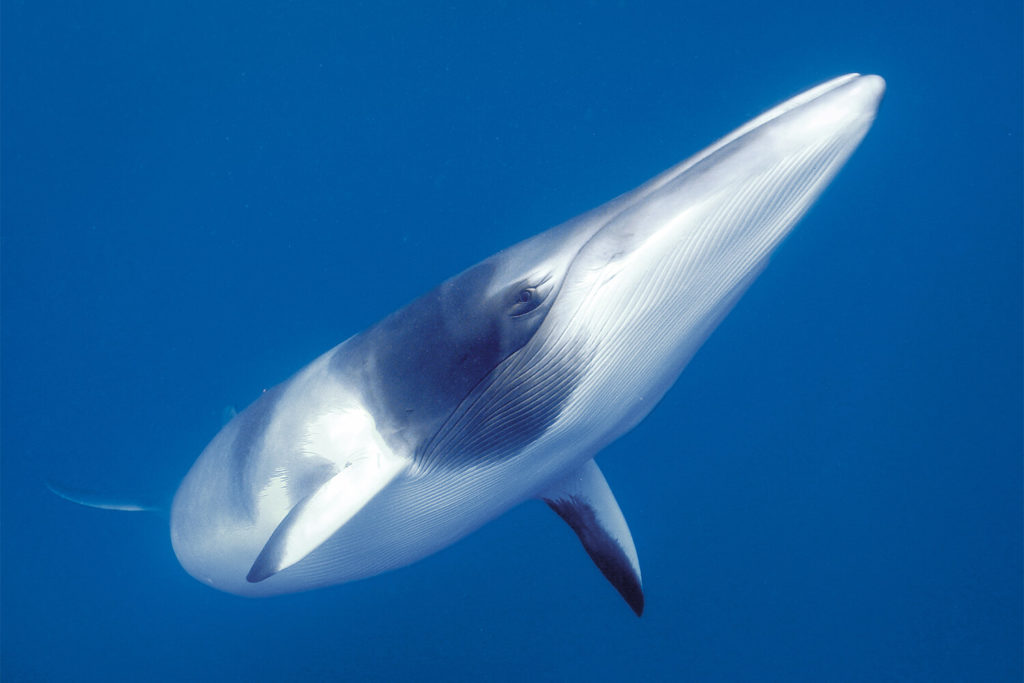
Dwarf minke whales are the smallest of the minke whale species, and they are uniquely drawn to the Ribbon Reefs of the northern Great Barrier Reef every austral winter. What makes this aggregation globally significant is simple: it happens nowhere else in the world at this scale. Scientists and marine biologists still don’t fully understand why these whales gather here, which only adds to the mystique.
Unlike many whale-watching experiences where you observe from a distance on a boat, dwarf minke encounters at the Ribbon Reefs can be remarkably intimate. Under strict permit conditions, snorkellers are allowed to enter the water with trailing ropes — and the whales often approach of their own accord, circling swimmers out of curiosity. These are genuinely wild animals choosing to interact. You cannot chase them; they come to you.
Humpback whales also move through these northern Queensland waters in June and July, heading north on their annual migration, so sightings of both species in the same trip aren’t unusual.
You might also like:
Mission Beach as Your Base: Why It Works
Mission Beach sits roughly midway between Cairns and Townsville on the Cassowary Coast — a stretch of wet tropics coastline so lush and wild it feels a world away from the Gold Coast tourist trail. The beach itself is one of the most beautiful in Queensland, fringed by ancient rainforest and looking out toward Dunk Island.
While Mission Beach doesn’t operate its own dedicated Great Barrier Reef whale-watching vessels, it is:
- 88km south of Cairns — a 90-minute drive to major departure ports
- Connected to the outer reef via the closest mainland proximity on the entire coast
- A stunning base for multi-day stays combining reef tours with rainforest walks, cassowary spotting, and Dunk Island day trips
Staying in Mission Beach and day-tripping or overnighting to Cairns or Port Douglas for liveaboard reef tours makes absolute logistical sense — and it gives you access to one of Queensland’s most underrated coastal destinations in the process.
You might also like:
The Best Whale Watching & Great Barrier Reef Tours to Book in June–July 2026
1. Dwarf Minke Whale Liveaboard Expeditions (Ribbon Reefs)
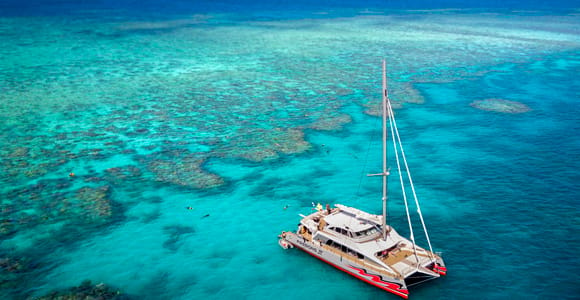
For the definitive experience, a liveaboard dive and snorkel expedition to the Ribbon Reefs is the gold standard. These trips depart from Cairns and run for 3 to 7 nights, travelling north to Cod Hole, Ribbon Reef No. 10, and the surrounding sites where minke whales congregate.
Operators running permitted minke whale interactions follow the Eye to Eye Marine Encounters research protocol — citizen science in the water, essentially — which means your trip directly contributes to ongoing research into why these whales gather here at all.
What to expect:
- Multiple reef dive and snorkel sites across the Ribbon Reefs
- Permitted in-water encounters with dwarf minke whales (conditions permitting)
- Night dives, Coral Sea coral gardens, pelagic fish species
- On-board marine biologist or naturalist guide
- Fully catered with all equipment provided
Best for: Certified divers and experienced snorkellers, adults and older teens, anyone wanting the full immersive encounter.
Price range: From approximately $800–$1,800 AUD depending on trip length and operator.
Browse available Queensland tours including liveaboard reef expeditions departing Cairns this winter.
You might also like:
2. Day Reef Tours from Cairns with Whale Sighting Potential
Not everyone can commit to a multi-day liveaboard — and that’s completely fine. Several Cairns-based day tour operators run outer reef trips during June and July, and whale sightings (both dwarf minke and humpback) are a genuine possibility on the transit to and from the reef.
What to expect:
- Full-day trips (departing ~8am, returning ~5:30pm)
- Reef pontoon access at Moore Reef, Michaelmas Cay, or Agincourt Reef
- Snorkelling and semi-submersible or glass-bottom boat viewing
- Whale sightings are opportunistic — not guaranteed on day trips
- Some operators will make unscheduled stops if whales are spotted
Best for: Families, non-divers, travellers with limited time, anyone staying in Cairns or Mission Beach wanting a single-day reef experience.
Price range: From approximately $180–$320 AUD per adult.
You might also like:
3. Port Douglas to Outer Reef Tours (Agincourt/Ribbon Reefs)
Departing from Port Douglas, roughly 75km north of Cairns, gives you even closer access to the Ribbon Reefs — particularly the Agincourt Reef system. This is genuinely some of the most pristine outer reef territory in the entire Great Barrier Reef Marine Park, and winter water conditions here are exceptional: calm seas, 20–25 metre visibility, and water temperatures around 23–24°C.
Port Douglas operators including Quicksilver Connections run daily high-speed catamaran trips to Agincourt Reef that cover around 60km of open ocean in roughly 90 minutes.
What to expect:
- High-speed catamaran departures from Crystalbrook Marina, Port Douglas
- Access to outer Agincourt Reef platform
- Snorkelling, scuba diving (introductory and certified), underwater observatories
- Whale sightings on transit are common in June–July
Best for: Travellers already based in Port Douglas or Cairns, families, photographers.
Price range: From approximately $250–$380 AUD per adult.
Explore the full range of guided tours departing from Tropical North Queensland on GetYourGuide.
You might also like:
What to Know Before You Go: Practical Tips for Whale Season
Book liveaboards early. Dwarf minke whale season is June and July only — and the best liveaboard operators book out weeks, sometimes months, in advance. If you’re reading this in June 2026, check availability immediately and look for last-minute spots.
Winter conditions are ideal. The Great Barrier Reef in June and July is genuinely at its finest. The wet season is over, trade winds are mild, and visibility underwater is at its peak. Seasickness risk is lower than in summer or shoulder season.
What to pack:
- Rash vest or 3mm wetsuit (water is 23–24°C — comfortable but cool over long snorkel sessions)
- Reef-safe sunscreen (essential — chemical sunscreens are prohibited in Marine Park)
- Motion sickness medication if you’re prone (especially for offshore liveaboards)
- Underwater camera or GoPro with a wrist mount
- Binoculars for surface whale watching from the boat
In-water interactions are not guaranteed. Dwarf minke whale encounters depend entirely on whether the whales approach. Reputable operators are transparent about this — if a tour company promises encounters, be cautious.
Permits matter. Only operators holding a Queensland Parks and Wildlife Service permit for in-water whale interactions are legally allowed to offer this experience. Verify this before booking.
Combining Whale Season with the Wider Cassowary Coast
Mission Beach and the Cassowary Coast offer far more than a reef transfer point. While you’re basing yourself here for whale season, consider:
- Dunk Island day trips — the island sits just 4km offshore and is slowly being regenerated after Cyclone Yasi; day trips by water taxi run from Wongaling Beach
- Cassowary spotting in the rainforest at Licuala State Forest — Mission Beach has one of the highest cassowary densities in Queensland
- Paronella Park near Innisfail, a UNESCO-listed heritage site and one of the most atmospheric places in the entire state, just 45 minutes north
- Wallaman Falls, Australia’s highest single-drop waterfall, approximately 90 minutes west via Ingham
The Queensland beaches at Mission Beach itself — particularly Bingil Bay and South Mission Beach — are among the most beautiful in Tropical North Queensland, and mid-winter is peak season: warm sunny days, no stingers, clear offshore water.
You might also like:
Getting to Mission Beach & Departure Ports
By air: Fly into Cairns Airport (CNS), then hire a car or join a shuttle south. The drive from Cairns to Mission Beach is approximately 2 hours via the Bruce Highway.
By car from Cairns: Head south on the Bruce Highway to El Arish, then follow signs east to Mission Beach — simple, scenic, and straightforward.
From Mission Beach to Cairns for tours: Most reef tour operators provide hotel/port pick-up from central Cairns. Driving from Mission Beach to Cairns Marina takes approximately 90 minutes. Alternatively, book a shuttle.
From Mission Beach to Port Douglas: Approximately 2.5 hours north via Cairns — a beautiful drive through the wet tropics with the option to stop at Mossman Gorge.
Explore more Queensland travel guides for Tropical North Queensland, the Whitsundays, and beyond.
Quick Answer: Is June or July Better for Dwarf Minke Whale Tours?
Both months are excellent. June tends to see the earliest aggregations as whales move in, and availability for liveaboards is slightly better early in the month. July typically sees peak whale numbers at the Ribbon Reefs, with more consistent encounters reported by operators. If you can only choose one week, late June through mid-July is widely considered the sweet spot.